Southwest Airlines
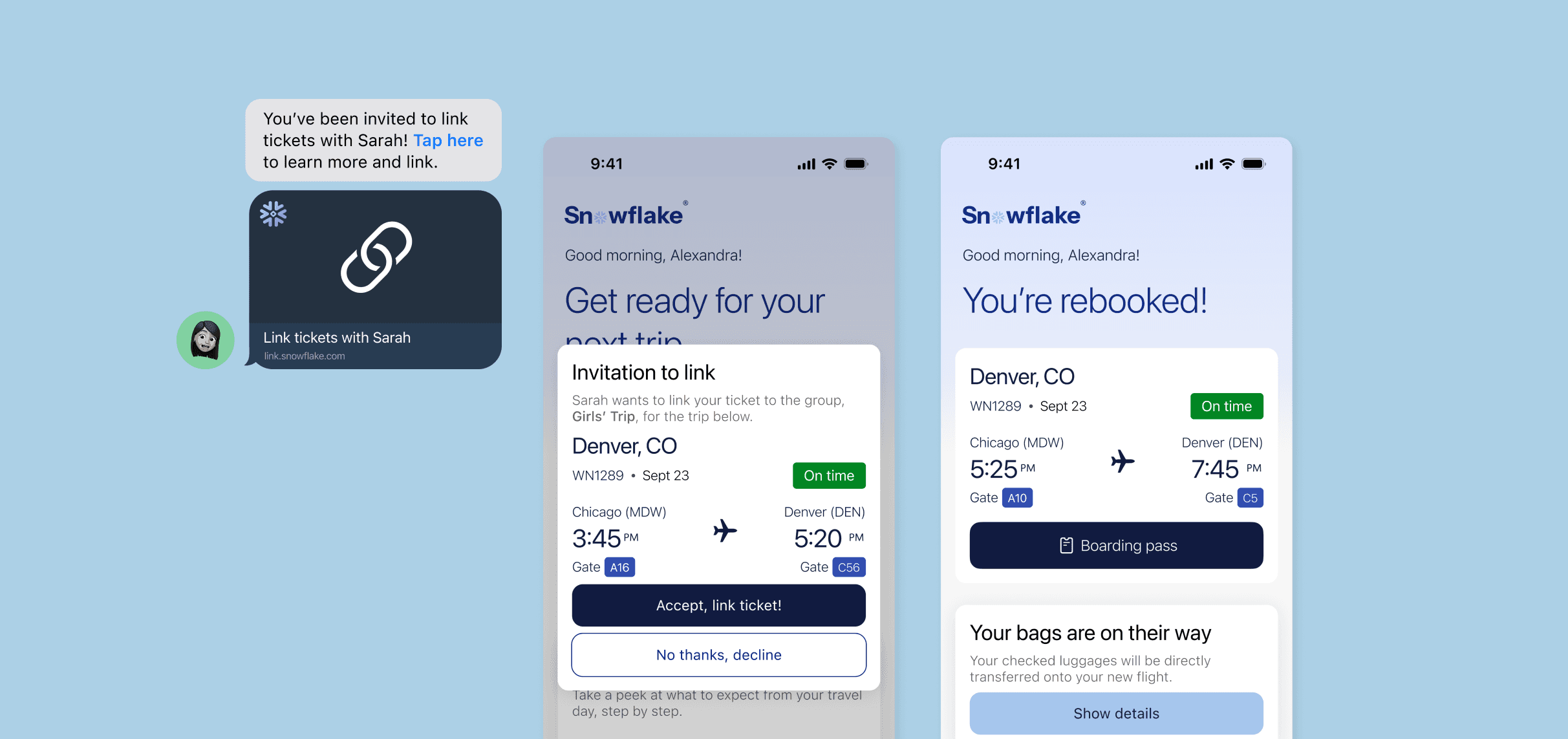
We introduced Group Ticket Linking to reduce gate congestion during delays and cancellations by helping travelers coordinate and rebook without overwhelming gate agents.
Role
Product Designer
UX Researcher
Jan - Mar 2025
Team
May Phan
Riley Nicholson
Zhiyu Ren
Context
In a product design course at Northwestern, I partnered with Southwest Airlines’ Innovation team on a challenge focused on delays and cancellations. After research, we narrowed in on the gate experience, where confusion and rebooking stress are often highest for both travelers and staff. With fewer customer service agents available, the airline needed a lower-cost way to reduce staff workload without hurting the customer experience.
Our team proposed app features like group ticket linking, multi-channel rebooking updates, and small interaction improvements to help travelers recover more confidently while easing pressure on agents.
Initial Design Challenge
How might we increase customer autonomy and employee efficiency during cancellations and delays without sacrificing our award-winning customer service experience?
Problem
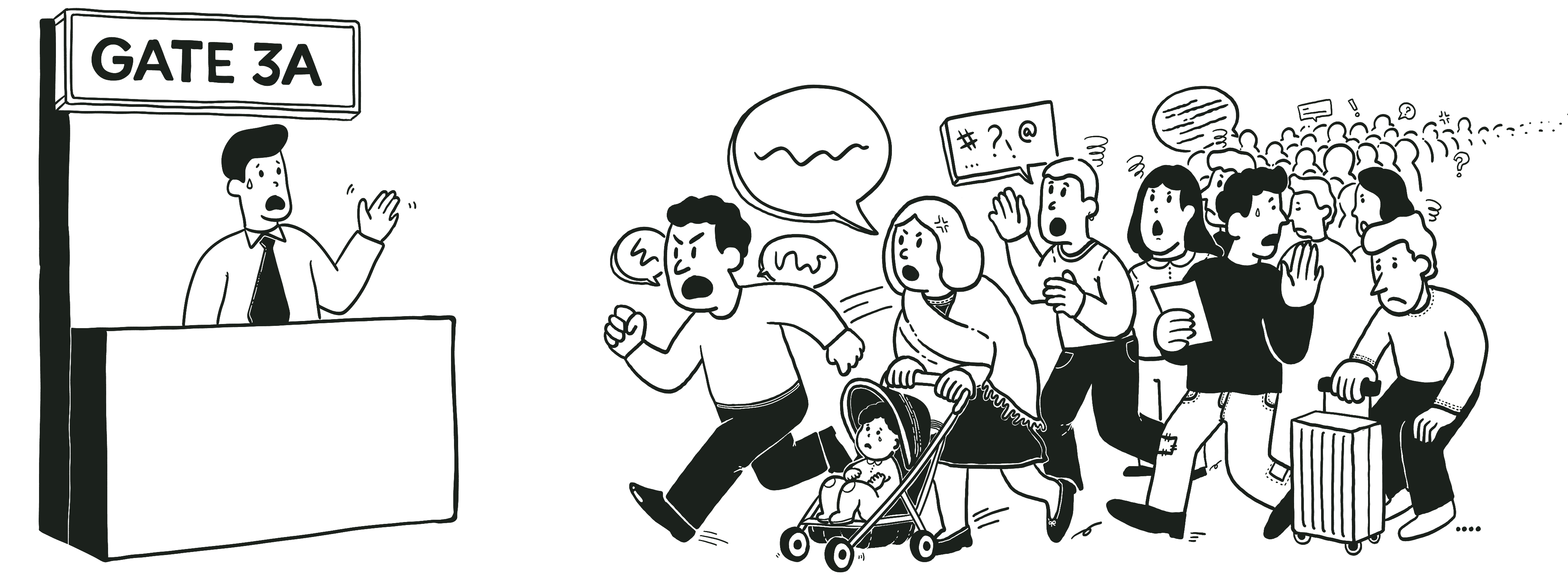
When flights cancel, rebooking drives crowds to the gate and slows everything down. Gate agents are pushed into crowd control while juggling complex logistics. The result is a stressful, inefficient experience that leaves customers feeling stranded and staff stretched thin, putting Southwest’s brand at risk.
Field Research
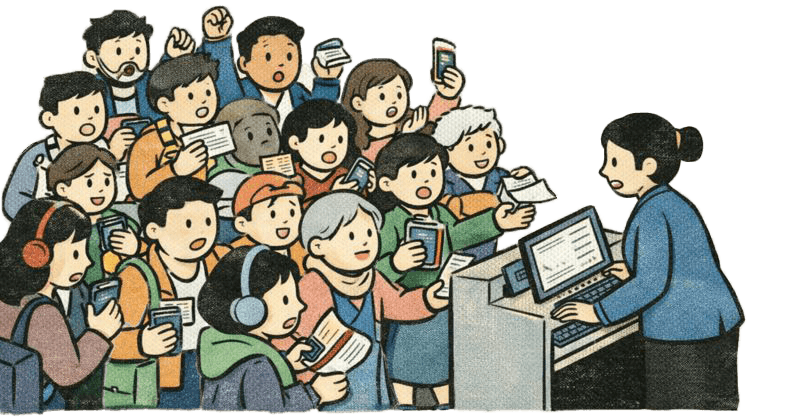
We conducted field research at Chicago Midway International Airport to understand disruptions. While on site, a flight was unexpectedly canceled, and passengers flooded the gate with only two agents available.
After speaking with 5 gate agents and 8 Southwest flyers, we synthesized our findings into the following key insights.
Key Insights
Rebooking often became a coordination problem for group travelers
When changes were handled primarily in person, coordination became slow and emotionally charged. Simple questions quickly turned into long waits.

Outdated tools undermine consistent, empathetic support
Clear, compassionate communication built trust, but outdated tools and fragmented workflows made the experience inconsistent.
Travelers struggled to keep up with critical updates
Announcements competed with noise and distraction. Even attentive travelers can miss key updates, leaving many unsure of next steps during moments when clarity mattered most.
User Archetypes
From interviews and on-site observations, we saw clear patterns in how travelers respond to disruptions. We distilled these behaviors into two archetypes that framed the problem and guided our design decisions.
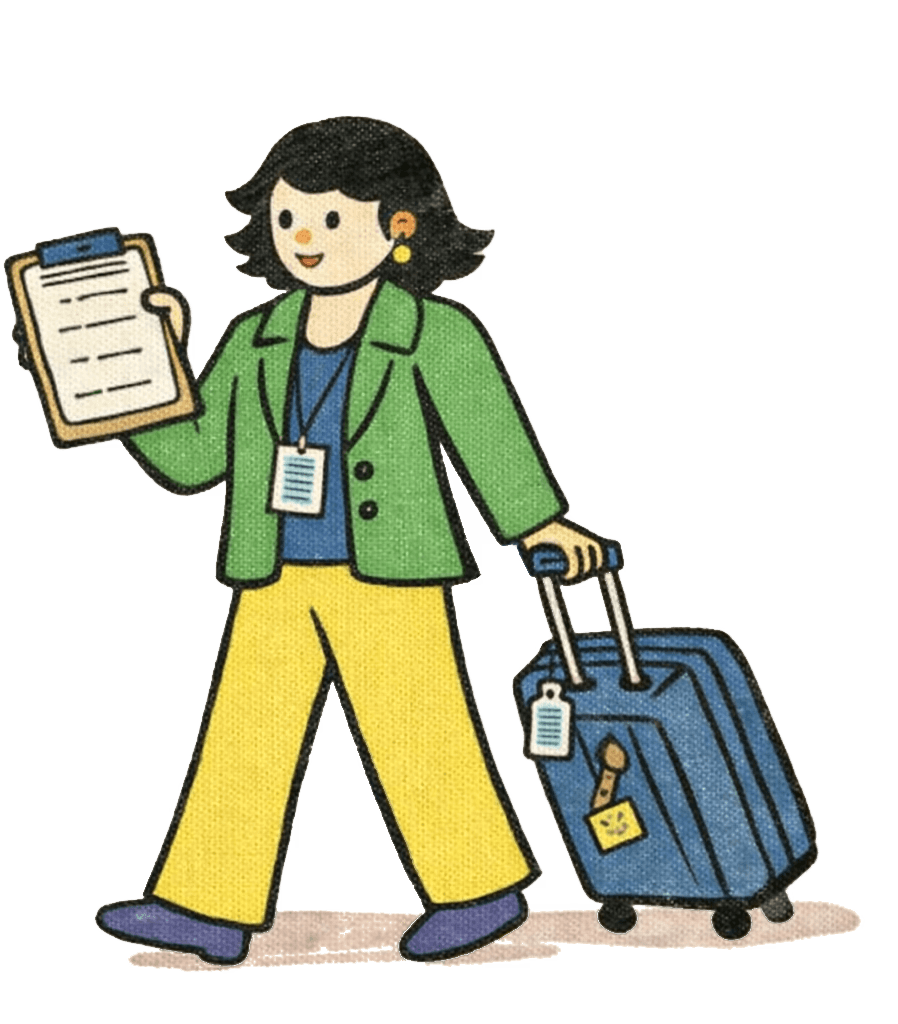
Commander
Coordinates logistics for the group
Prioritizes flexibility and control
Actively seeks updates and information
Design Requirement: Needs fast, reliable ways to compare options and act on behalf of others.
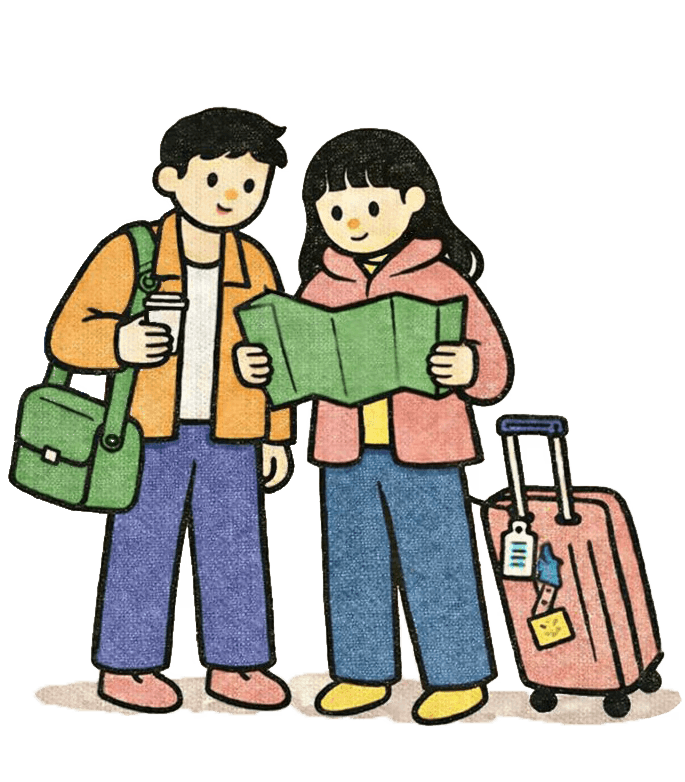
Go-Along Travelers
Prefers minimal involvement in logistics
Relies on others to make decisions
Avoids managing details unless necessary
Design Requirement: Requires clarity, confidence, and straightforward next steps without adding cognitive load.
Visualizing Opportunity Space
To understand where design could help most, we mapped the traveler journey during delays and cancellations. We found that stress was highest after travelers learned their plans had changed, especially during gate rebooking. This helped us focus on the moments when people felt most confused and overwhelmed.
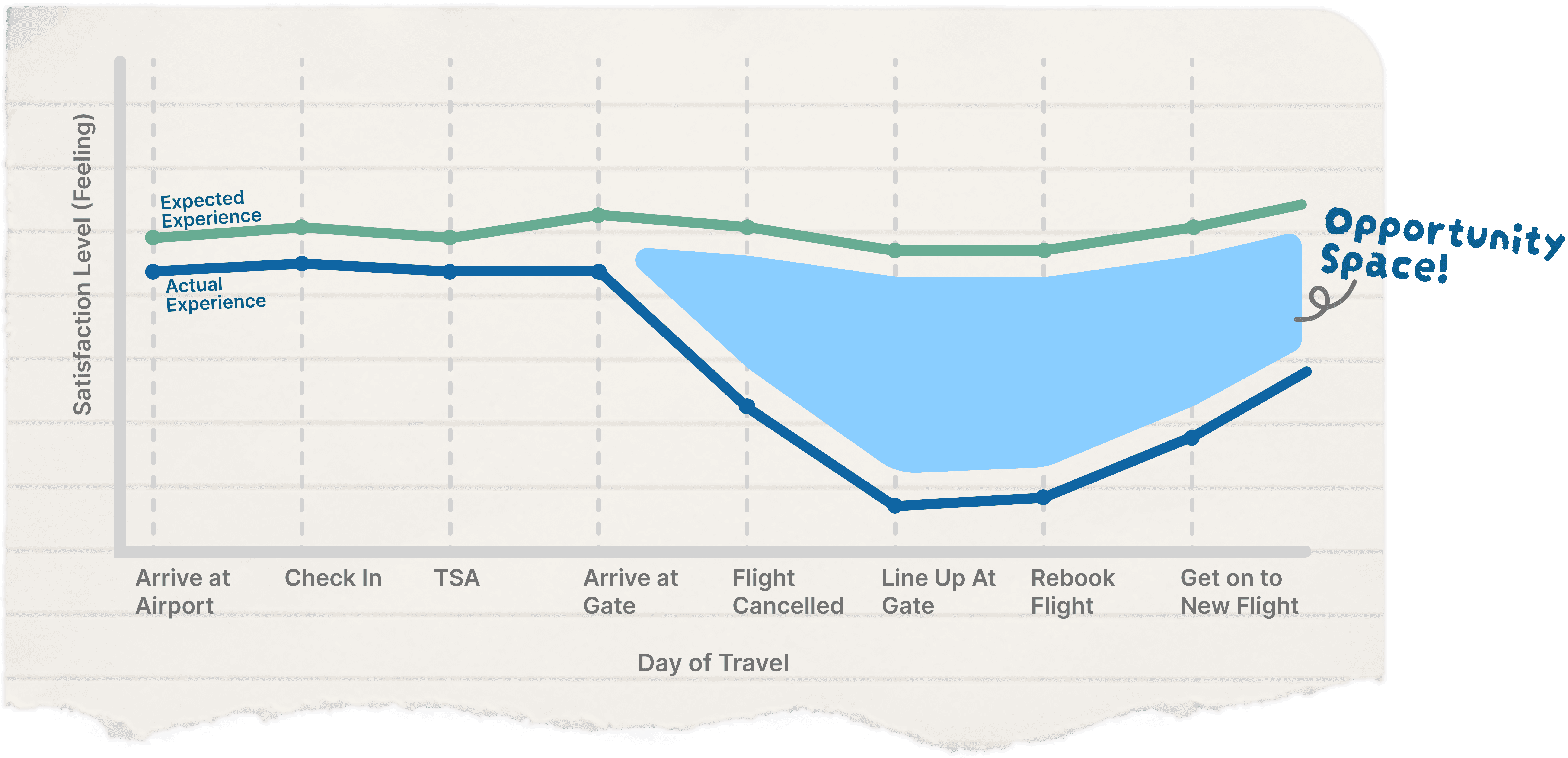

Refining scope by iterating on the design challenge
How might we help groups rebook together faster at the gate during cancellations and delays, with less waiting and confusion?

Ideation - Crazy 8s Brainstorming
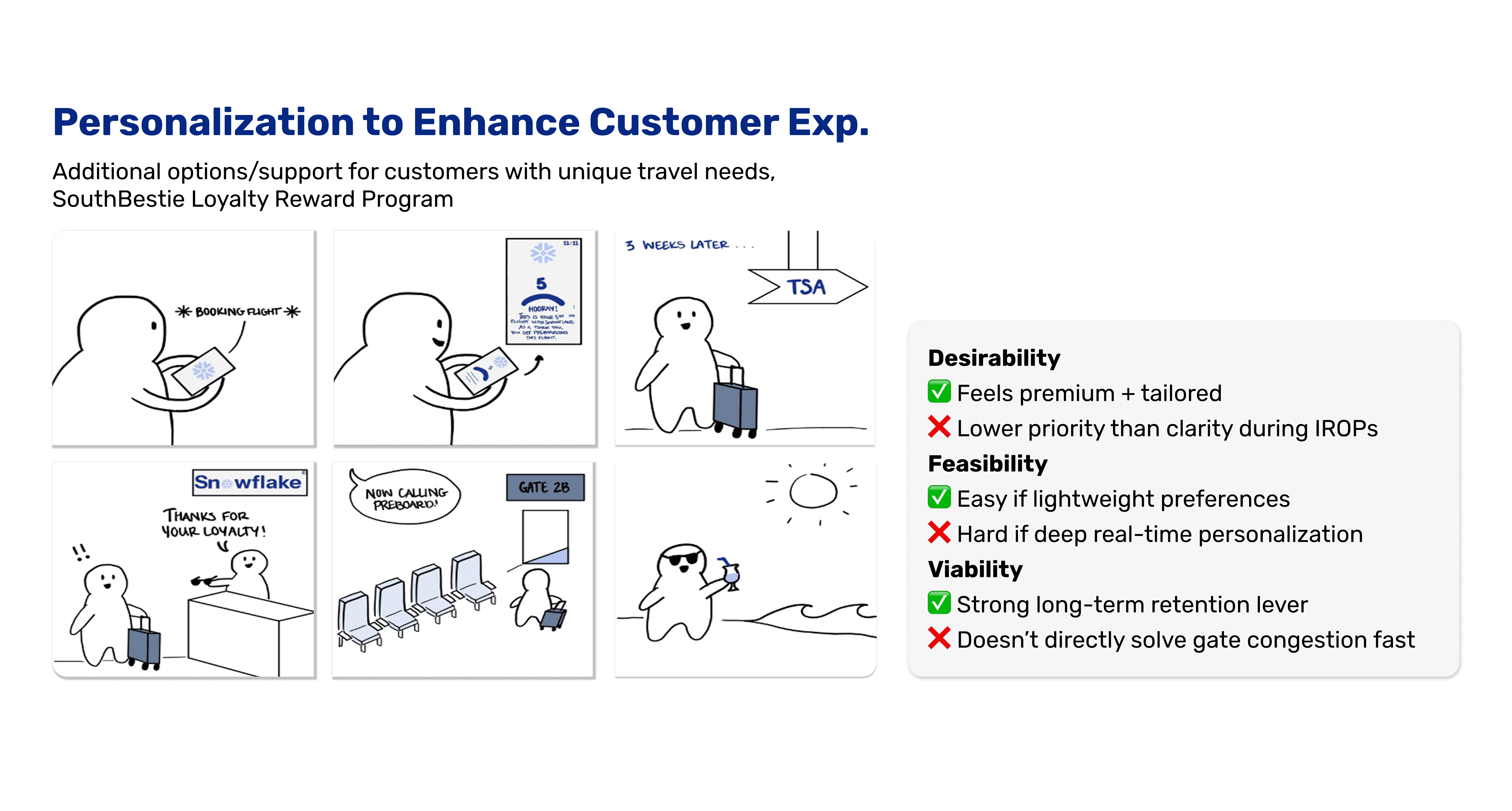
To define feature directions to improve the experience for both flyers and gate agents, our team ran a Crazy-8s brainstorming session. This exercise helped us quickly surface, compare, and combine ideas to address the most critical user pain points.
Aligning with Business Goals
For Customers:
Groups can rebook or cancel together without waiting in line, reducing stress during already difficult moments.
For Employees:
The feature offloads routine rebooking tasks, allowing agents to focus on complex cases and provide higher-quality support where it matters most.
Design Iterations
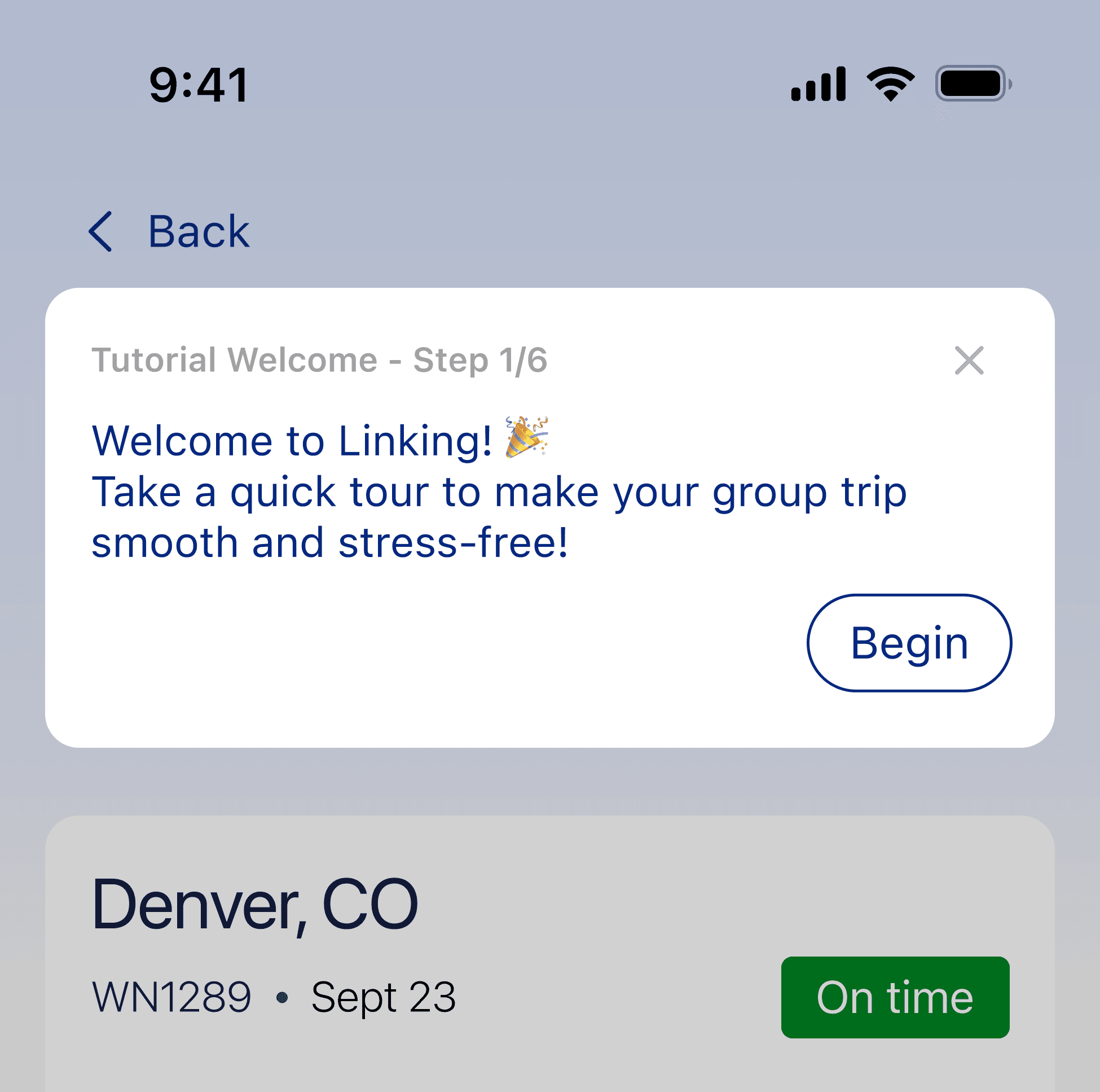
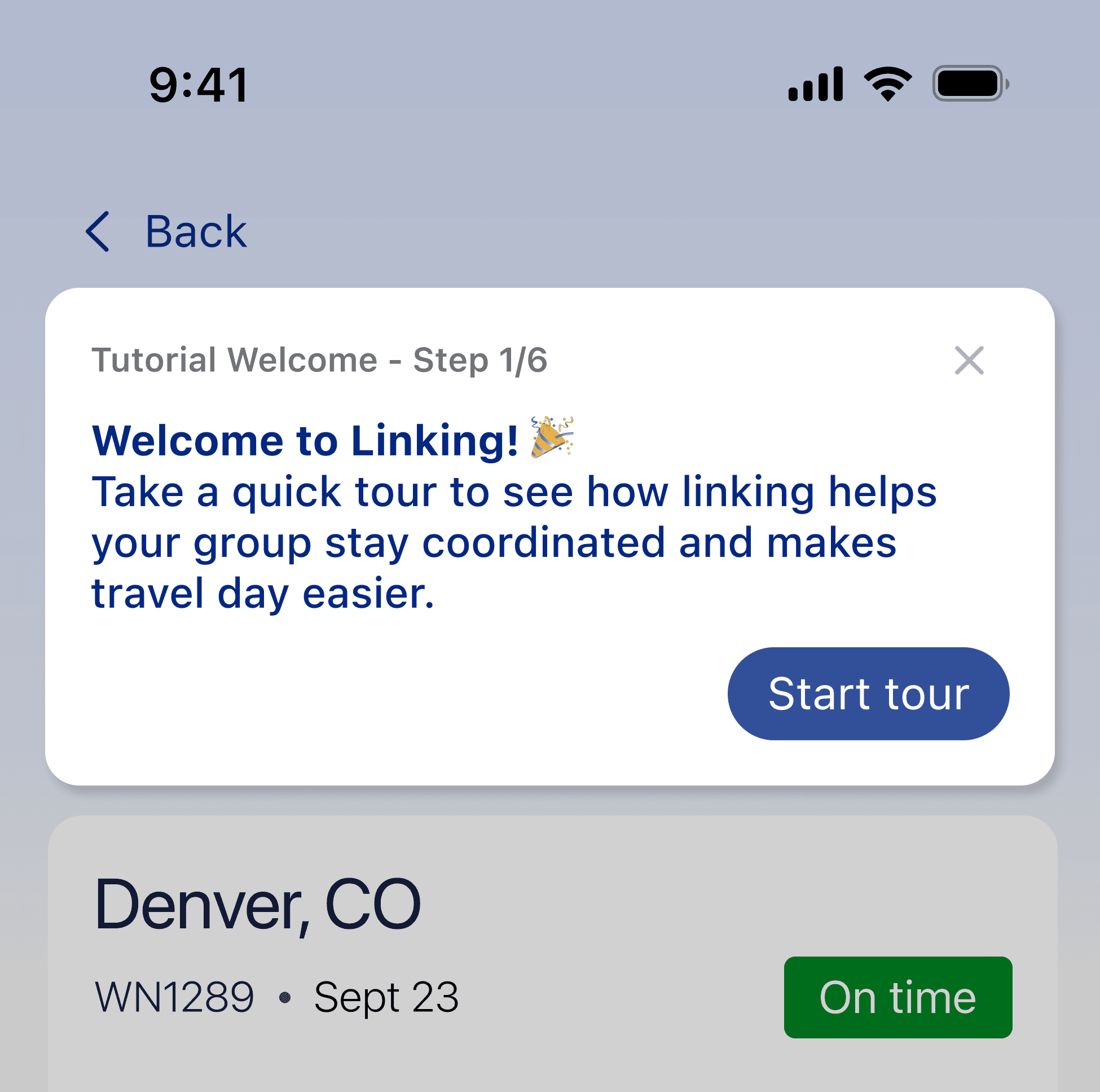
Confusion around ticket linking
Early designs assumed users would understand the value of linking tickets upfront. Travelers hesitated, questioned privacy, and often dismissed the opt-in before understanding the benefit. A short onboarding moment helps by setting expectations early and building trust before disruptions.
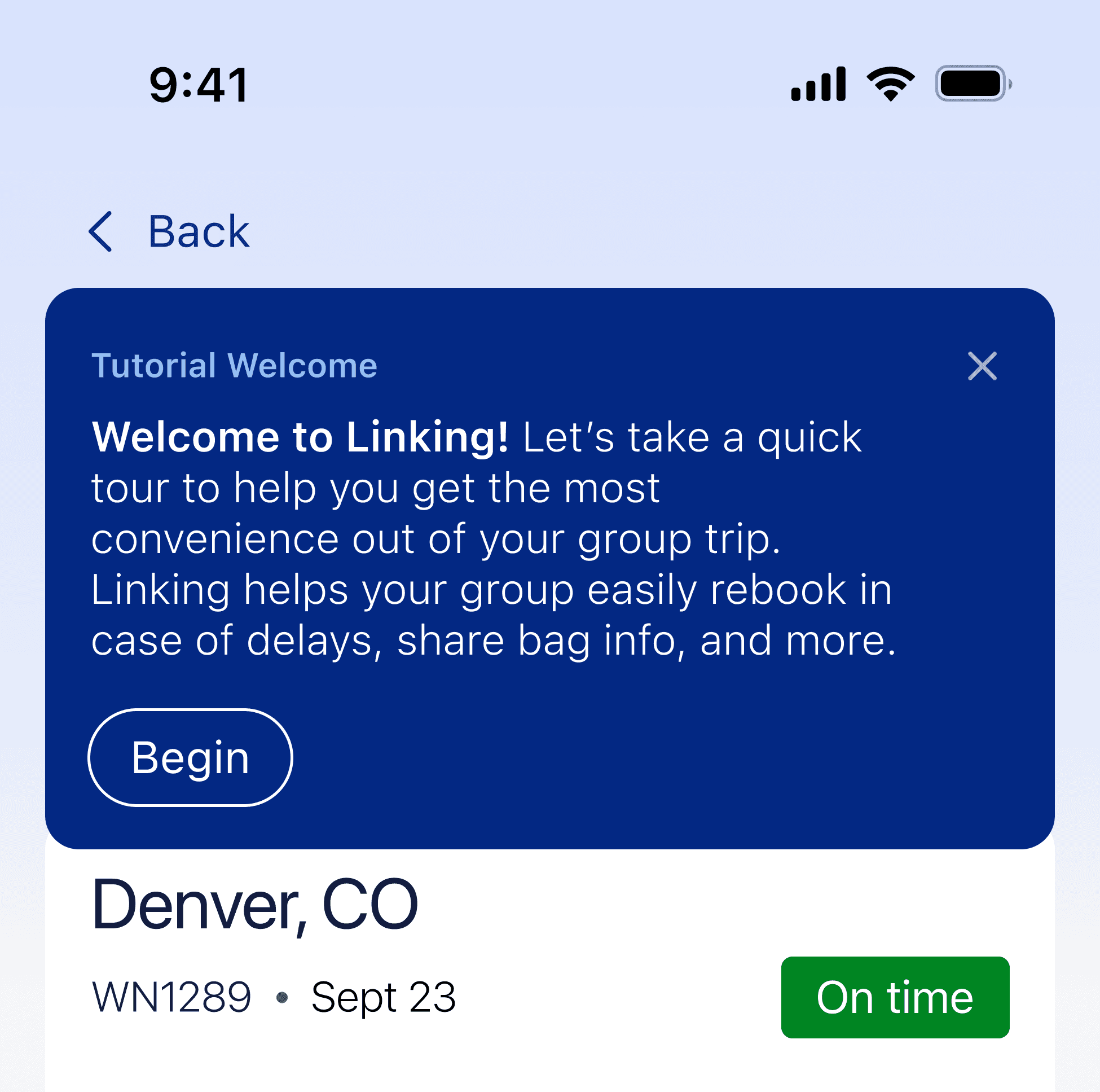
First Iteration:
❌ Copy is hard to skim
❌ Card feels heavy over trip info
Second Iteration:
✅ Cleaner layout, faster to read
❌ Looks like a passive banner
❌ Outlined CTA feels easy to ignore
Final Iteration:
✅ Strong hierarchy clarifies the value
✅ Filled “Start tour” drives action
Reassurance and familiarity matter
While Commanders were comfortable moving quickly, Go-Along Travelers looked for familiar steps, such as seat selection, to feel confident. We mirrored existing booking patterns to reduce cognitive load and rebuild trust without slowing the experience down.
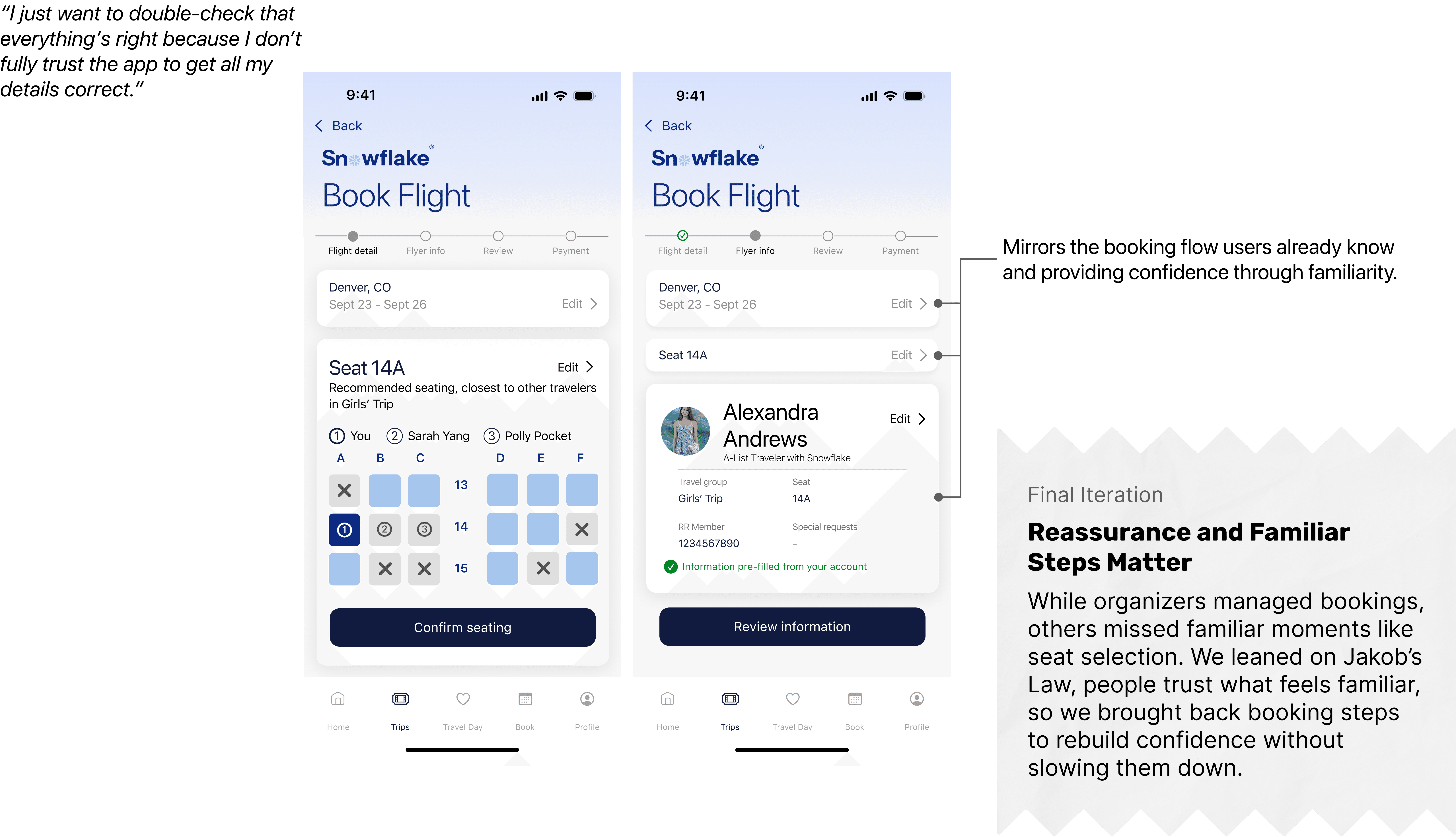
A quick walkthrough to reduce confusion with the new feature
Testing showed users didn’t understand the new feature on first pass, so we added a short onboarding walkthrough to clarify the value and reduce hesitation
Flexible linking, flexible group control
Travelers can link tickets in advance via an invite link or on the spot at the gate. The organizer can add or remove people, or hand off leadership to keep the group flexible.
Automatically join the trip after booking
When a traveler books through the invite, they are automatically connected to the trip, so everyone shares the same itinerary.
Stay together or split up, without having to wait in line
During delays or cancellations, linked travelers can rebook everyone at once or choose separate options without coordinating in line.
Next Steps and Reflection
Validate assumptions with real travelers and agents
Test the group rebooking concept during simulated or live irregular operations to understand how people make decisions under stress and where trust breaks down.
Pressure-test operational feasibility
Partner with gate agents and operations teams to evaluate how ticket linking would integrate with existing workflows and systems during disruptions.
Explore edge cases and scale
Expand the concept to support larger groups, mixed itineraries, accessibility needs, and partial rebooking scenarios, ensuring the experience remains clear and manageable as complexity increases.
This project reinforced that designing for disruptions is about more than speed. Travelers often hesitate even when faster options exist, seeking reassurance through familiarity and clarity. Supporting both the person who takes charge and those who follow helped us design an experience that scales care without removing the human touch.
Designing for irregular operations pushed me to think beyond ideal flows and focus on moments when trust is most fragile. It sharpened my ability to balance autonomy, empathy, and operational realities in complex systems.
Yay! We've made it to the finish line.
Have a question, some feedback, or an outrageous idea? 🔍