
Procter & Gamble
Designing a dishwashing tool that makes an everyday chore feel more intuitive, practical, and delightful.
Role
Design Researcher
Product Designer
Timeline
Sept 2024-Dec 2024
Team
Riley Nicholson
Eva Ford
Ibra Bah
Johnny Chen
Project Overview
In a sponsored studio project with Procter & Gamble, our five-person team spent a full academic quarter reimagining part of the everyday dishwashing experience, from an open-ended brief through a final concept presented to P&G leadership in Cincinnati. Because the project remains under NDA, this case study focuses on my process as a researcher and designer rather than the specific product outcome.
My role
Spanning research, design, and cross-functional collaboration throughout the project:
Took part in interviews and synthesis with the team
Led sketching and visualization of prototype directions, shaping color, finish, and silhouette in alignment with the Dawn brand
Partnered closely with our product manager and engineer through design review, helping the team find a direction that held up against both real user needs and P&G's business goals

Process
Sprint 1: Research
The hardest research skill I built here wasn't asking the right questions, it was learning when not to ask them at all.
In-home visits opened the project, two rounds, spread across real households, watching people wash dishes exactly as they normally would rather than asking them to describe it after the fact. It was hard for me to resist the urge to ask a clarifying question mid-scrub, and only probing once the moment had already passed. The instinct to jump in and ask "why did you just do that" the second something interesting happens is strong, and learning to hold that instinct until the natural pause is where a lot of the real research craft in this project lived for me.

Sprint 2: Synthesis and First Concepts
Synthesis taught me to distrust my own excitement, staying honest to what the data actually supported instead of the story I wanted to tell.
Our first round of consumer testing turned research into something we could actually react to; we leveraged ranking and sorting exercises to surface how people thought about existing tools, not just what they said out loud.
Synthesizing that into a real set of How Might We questions was its own kind of craft. It's tempting to synthesize toward the idea you're already excited about, and I kept reminding myself to stay honest to what the data actually supported, even when a more exciting story was sitting right there.

Sprint 3: Where Feasibility Met Business Reality
When my research and P&G's business requirements pointed in different directions, my job wasn't to pick a side, it was to find where they could both be true.
Midway through the project, our research and P&G's business requirements pointed toward two different directions for a specific decision. That's the moment that taught me the most about what design research is actually for. Our goal was to find the version of the truth that's still actionable inside real constraints. Working closely with our product manager, our team wrote a formal recommendation, reviewed first by faculty and then presented directly to P&G. We structured our research finding into something a business could genuinely act on without watering down what we'd learned or ignoring what P&G needed to stay viable.


Defending a direction I believed in while staying genuinely open to being wrong about it turned out to be the hardest, most valuable skill this project taught me.
Feasibility stayed an active, ongoing conversation well past that first decision. Presenting prototypes to P&G's engineering stakeholders across a series of design reviews meant real, concrete tradeoffs, adjustments like:
Simplifying a mechanism to make it easier to manufacture at scale
Reconsidering a material choice after it read differently than intended
Shifting where a key interaction happened based on cost and production constraints
Collaborating closely with our engineer throughout meant every direction I brought into the room had already been pressure-tested against what could actually be built, not just what looked right on paper. That collaboration is what made the tradeoffs above possible to navigate quickly, catching constraints in time to adjust rather than discovering them too late to act on.


Sprint 4: Narrowing to a Final Direction
I led the sketching and visualization of prototype directions, translating early concepts into something the P&G team could actually react to.
Sketching a direction forces decisions a verbal description lets you avoid, exact proportions, how a hand would actually hold something, where a mechanism would physically sit. Working with our team's engineer to bring those sketches into physical form taught me how differently materials behave than a flat sketch implies, knowledge that made every sketch after that one sharper. Letting evidence overrule attachment, even to ideas my own team had put real work into, was a harder discipline than generating the ideas in the first place.
Our second round of consumer testing put real prototypes directly into people's hands, testing across comfort, control, and material preference. Narrowing multiple strong concepts down to one meant staying disciplined enough to let the evidence make that call, even against personal attachment to a direction someone on the team, myself included, had put real work into.

Outcome & Reflection
We presented our final concept to P&G leadership at their headquarters in Cincinnati in December 2024, walking them through the full arc from early research through final prototype. Standing in that room, defending months of decisions built on real research and real constraints, taught me what it actually feels like to own a recommendation. The direction was well received, confirmed as a strong, credible path worth building on.
This project showed me how much design opportunity lives in the details of everyday behavior. The strongest ideas came from watching how people actually moved through a familiar routine and identifying the small frustrations they had normalized. It taught me that meaningful innovation does not always have to be loud; sometimes it comes from making a mundane task feel easier, more intuitive, and even a little more delightful!
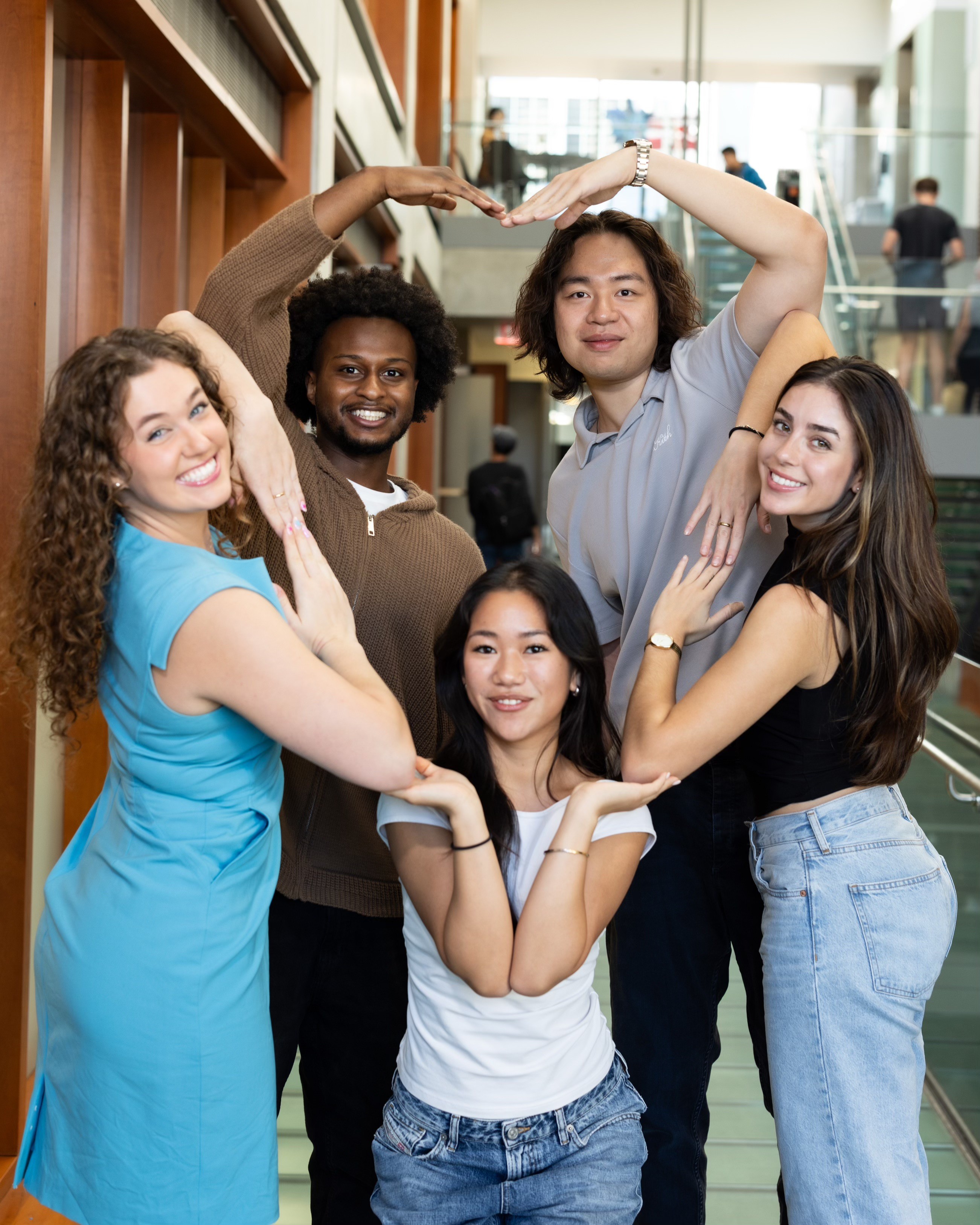

Yay! We've made it to the finish line.
Have a question, some feedback, or an outrageous idea? 🔍